
Identifying Religious Trauma
 admin
Oct 8, 2026
2
0
admin
Oct 8, 2026
2
0
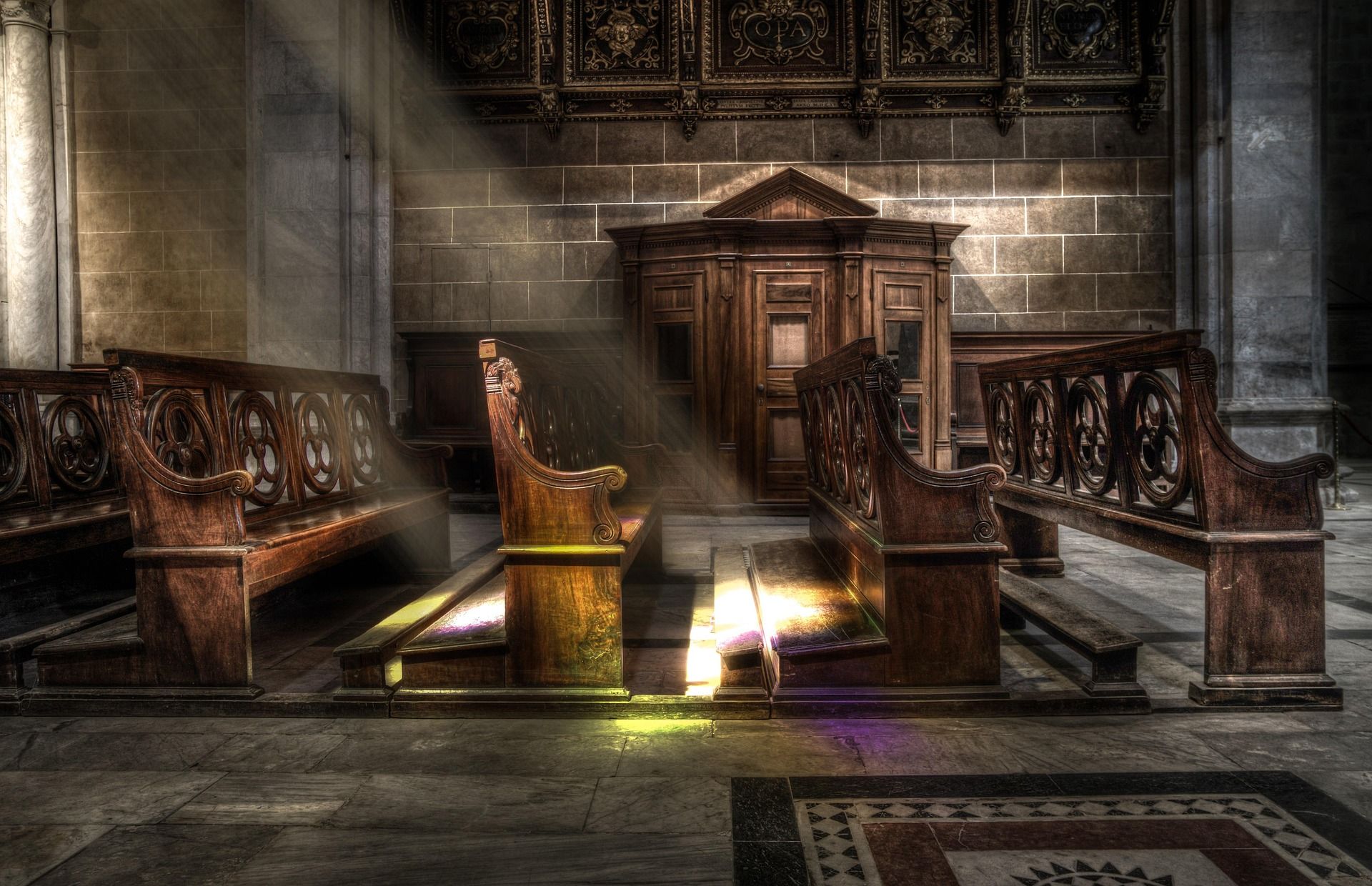
The last time I attended a church service, I had a panic attack.
It caught me completely off guard because nothing dramatic was happening. The service itself was fairly ordinary. There were old hymn books tucked into the backs of wooden pews, the faint smell of polished timber and stale church carpet, and the familiar rhythm of liturgy I had known for most of my life. People smiled politely during the passing of the peace, that strange moment where everyone suddenly turns into an overly enthusiastic greeter for ninety seconds before sitting back down again.
On the surface, it all felt harmless.
But as the service went on, I could feel something tightening inside me. My chest became heavy. My breathing shortened. Even the music started affecting me in ways I could not fully explain. Song after song revolved around sin, unworthiness, failure, and the overwhelming message that without divine intervention, we are fundamentally wretched creatures.
Back then, I would have blamed myself immediately for how I was feeling. I would have wondered if I had let God down somehow, opened the door to sin, or allowed something dark into my life spiritually. That was the framework I had been handed for understanding almost any kind of emotional struggle.
That is the strange thing about growing up in certain religious environments. You learn to spiritualize almost everything before you learn to understand yourself psychologically.
Now I understand something very different.
Sometimes the body reacts to environments the mind has spent years trying to normalize.
In recent years, psychologists and trauma researchers have begun paying closer attention to what is now commonly called religious trauma. The term describes the lingering psychological and emotional effects that can emerge from fear-based theology, authoritarian religious systems, chronic shame, spiritual manipulation, and environments where questioning, doubt, or personal boundaries were treated as threats rather than part of healthy human development.
The hard part is that a lot of people do not even realize this stuff is affecting them. When you grow up hearing the same messages week after week, they just start to feel normal. You stop noticing how much fear sits underneath them.
For some people, church was deeply beautiful. It gave them friendship, meaning, support, and hope.
For others, it also became a place where they learned to override themselves constantly. Doubts felt dangerous. Boundaries felt selfish. Certain emotions felt sinful. You learned how to say the right things, pray the right prayers, sing the right songs, and look spiritually “okay” even when something inside you was slowly wearing down.
Not every church causes this, of course, and not every intense religious experience is traumatic. Many people experience genuine healing, love, meaning, and community through faith. But psychologists are increasingly recognizing that for others, the effects can run much deeper than simply having “a bad church experience.”
Sometimes those experiences leave lasting psychological patterns that continue long after a person has left the building. It is known as religious trauma.
Here are eight signs you may be carrying it without even realizing it.
- You Feel Anxious or Guilty for Questioning Authority
One of the clearest patterns psychologists see in survivors of high-control religious environments is a deep fear of questioning authority. Maybe you were taught that doubting church leaders was rebellious. Maybe asking difficult theological questions was treated as prideful or spiritually dangerous. In some churches, even trusting your own instincts could feel risky because you were constantly told your heart was deceptive. Over time, that kind of conditioning can seriously affect a person’s relationship with their own mind. According to research published in the Journal of Psychology and Theology and recent studies on Religious Trauma Syndrome, authoritarian religious systems can undermine personal autonomy and create chronic anxiety around independent thinking, self-trust, and decision-making. Researchers have identified symptoms including difficulty with critical thinking, guilt around questioning authority, and fear connected to forming beliefs outside approved theological boundaries. Meaning, if you dare to think for yourself and question things even when you know they are wrong or at least questionable, you stop yourself and use a phrase like "Only God knows those who are truly serving Him"...
2. You Constantly Feel “Not Good Enough” Spiritually
One of the most common threads running through religious trauma research is shame.
Not ordinary guilt over mistakes. A much deeper feeling that there is something fundamentally wrong with you as a person.
For many people raised in fear-based religious environments, the message was repeated constantly in different ways. You are sinful. Your heart is deceitful. You are broken. You are unworthy. Without God, you are nothing.
Over time, those messages can sink far deeper than theology. They can become part of your identity.
Researchers studying religious trauma and shame-based spirituality have repeatedly found that exposure to messages centered on depravity, punishment, and unworthiness can contribute to chronic shame, anxiety, low self-worth, and a deeply negative self-image. Some people eventually internalize the belief that they are fundamentally flawed, dirty, disappointing, or unlovable at their core.
3. Your Nervous System Goes Into Overdrive Around God, Church, or Certain Bible Verses.
I met a man in Germany, a Nigerian young man whose parents were pastors back home. We got talking, and I asked him which church he attends in Germany. He shook his head and laughed. He said he does not attend church because the church environment gives him bad memories and makes him nervous. I asked him why. He said, "I grew up in church, with two pastors as my parents; what do you think we do every time? We confess our sins, pray for forgiveness, and are constantly shamed for our actions, decisions and desires and reminded too many times of hell rather than how to live good lives. The moment I was able to escape from there, i told myself I would never go back” Understand that the body sometimes remembers things the conscious mind has spent years trying to minimize. According to trauma researchers and psychologists studying Religious Trauma Syndrome, people exposed to chronic fear-based religious environments can develop hypervigilance and trauma-conditioned responses connected to certain spiritual settings, language, rituals, and themes. That means particular songs, sermons, Bible verses, or church experiences can trigger the nervous system into a stress response even years later. Researchers describe this as the body learning to associate certain environments with fear, shame, punishment, or emotional danger.
4. You Struggle to Trust Yourself
One of the hardest things to explain to people outside these environments is how disconnected you can become from your own inner world.
You can reach a point where you no longer know what you actually feel, want, believe, or need because so much of your life has been filtered through the question: “What would God want me to do?” Except, in many cases, what that really meant was: “What would the church approve of?”
A lot of us became very good at asking, “What’s the right thing to do?” long before we ever learned to ask, “What do I actually think about this?”
Trauma therapist Dr. Laura Anderson, who specializes in religious trauma and high-control environments, explains that certain spiritual environments can create deep disconnection from the self. Many people learn to override their instincts, emotions, bodily signals, and personal boundaries in order to remain accepted within the group. Over time, this can lead to chronic confusion around identity, desires, decision-making, and emotional safety.
5. You Feel Fear When Setting Boundaries.
A lot of people from high-demand church cultures were never really taught how to say no without feeling guilty afterwards. You were praised for being available. Praise for serving. Praised for sacrificing. Praise for putting other people first. The more exhausted you were, the more “committed” you often appeared.
I have noticed that some people become intensely uncomfortable the moment they disappoint somebody. Even small acts of self-protection can trigger guilt. Saying no feels heavier than it should. There is this instinctive fear that someone will see them as selfish, lazy, unspiritual, or difficult. Researchers who study religious trauma have noticed this pattern repeatedly in high-demand religious groups. When acceptance is tied too closely to obedience and self-sacrifice, people can start measuring their worth by how available, helpful, or accommodating they are to everybody else.
6. You Experience Shame Around Your Body or Sexuality
A lot of people raised in strict religious environments were not simply taught sexual ethics. They were taught to become deeply afraid of desire, attraction, temptation, and sometimes even their own bodies.
For many teenagers in purity culture, sexuality was presented as something volatile and dangerous that had to be tightly controlled at all times. Desire was treated with suspicion. Attraction carried shame. Even normal curiosity could leave you feeling like you had spiritually failed.
That kind of messaging leaves a mark on people.
According to researchers studying purity culture and authoritarian religion, shame-based teaching around sex and the body has been linked to anxiety, body disconnection, sexual dysfunction, low self-worth, and long-term psychological distress. Researchers have also found that many people raised in these environments continue carrying deep feelings of guilt and shame around intimacy well into adulthood, even after intellectually rejecting the beliefs themselves.
7. Leaving Church Felt Like Losing Your Entire Identity
One of the things people outside these environments often do not understand is that leaving church is rarely just about changing your beliefs.
In many high demand religious systems, church becomes your entire world. Your friendships are there. Your routines are there. Your language is there. Your sense of meaning, morality, purpose, belonging, and identity are all tied into the same structure.
So when somebody leaves, they are not simply changing opinions about theology. Sometimes it feels more like a divorce, a bereavement, and an identity crisis happening all at once.
I have spoken to people who lost entire friendship groups almost overnight. Others suddenly felt disconnected from family members who could no longer understand them. Some described sitting at home on a Sunday morning feeling strangely untethered, like they no longer knew who they were outside the framework that had shaped their entire life.
Studies on religious disaffiliation and religious trauma repeatedly find that leaving tightly controlled faith systems can create profound emotional and existential distress because the person is not just losing beliefs. They are often losing community, certainty, structure, belonging, and long held identity frameworks all at the same time. Studies have linked this process to grief, anxiety, loneliness, identity confusion, and psychological distress.
8. You Still Feel Afraid That God Might Reject or Punish You
One of the strangest parts of religious trauma is that beliefs can fade long before fear does.
I have spoken to people who no longer believe in hell in any intellectual sense and yet still feel a jolt of panic when they question God, miss church, challenge certain doctrines, or hear old end-times language. Part of them still feels like punishment might be waiting around the corner somehow.
That kind of fear can become deeply embedded over time.
If you spend years hearing about wrath, judgment, eternal punishment, spiritual attack, deception, or the danger of “falling away,” your nervous system does not always switch those alarms off overnight just because your theology changes.
Dr. Marlene Winell, who coined the term Religious Trauma Syndrome, has written extensively about this lingering fear. People can intellectually let go of beliefs but still carry the emotional reflexes for years afterward. Fear of hell. Fear of punishment. Fear that something bad will happen because they questioned the wrong thing or walked away from the wrong system.
The Fear That Stays with You
When I was about twelve years old, our church showed us a movie about the end of the world.
It was based on a particular Christian belief called the rapture, the idea that true believers would suddenly disappear and everyone else would be left behind to face chaos, suffering, and divine judgment.
I still remember parts of it vividly.
Planes falling out of the sky because the Christian pilots had vanished. Cars crashing into each other. Families waking up to discover their parents or children were suddenly gone. The whole world descending into panic while ominous music played in the background.
I remember sitting there terrified.
And then came the altar call.
We were told the only way to be safe was to accept Jesus as our personal Lord and Savior. Looking back now, I honestly do not know how a child was supposed to separate love from fear in a moment like that.
I know some people will read this and immediately feel seen by it. Others probably will not relate to it at all.
And honestly, that makes sense.
Religion is deeply personal. For some people, church became a source of fear, shame, and emotional confusion. For others, it was the place that carried them through the hardest moments of their lives.
I want to be careful to say that clearly because not every church environment produces religious trauma. Some churches are genuinely healthy places filled with kind, emotionally mature people who are trying to love others well. Some people encounter real healing and support through faith communities.
But I also think we need to be honest about what fear does to people, especially children.
A child who learns to associate God with terror does not always just “grow out of it.” Sometimes those fears settle quietly into the nervous system and stay there for years.
Maybe that is part of what happened to me in that church service.
Maybe my body remembered something long before my mind was willing to name it.













Comments (0)
Facebook Comments (0)