
What Does The Bible Say?
 admin
Oct 6, 2026
2
0
admin
Oct 6, 2026
2
0
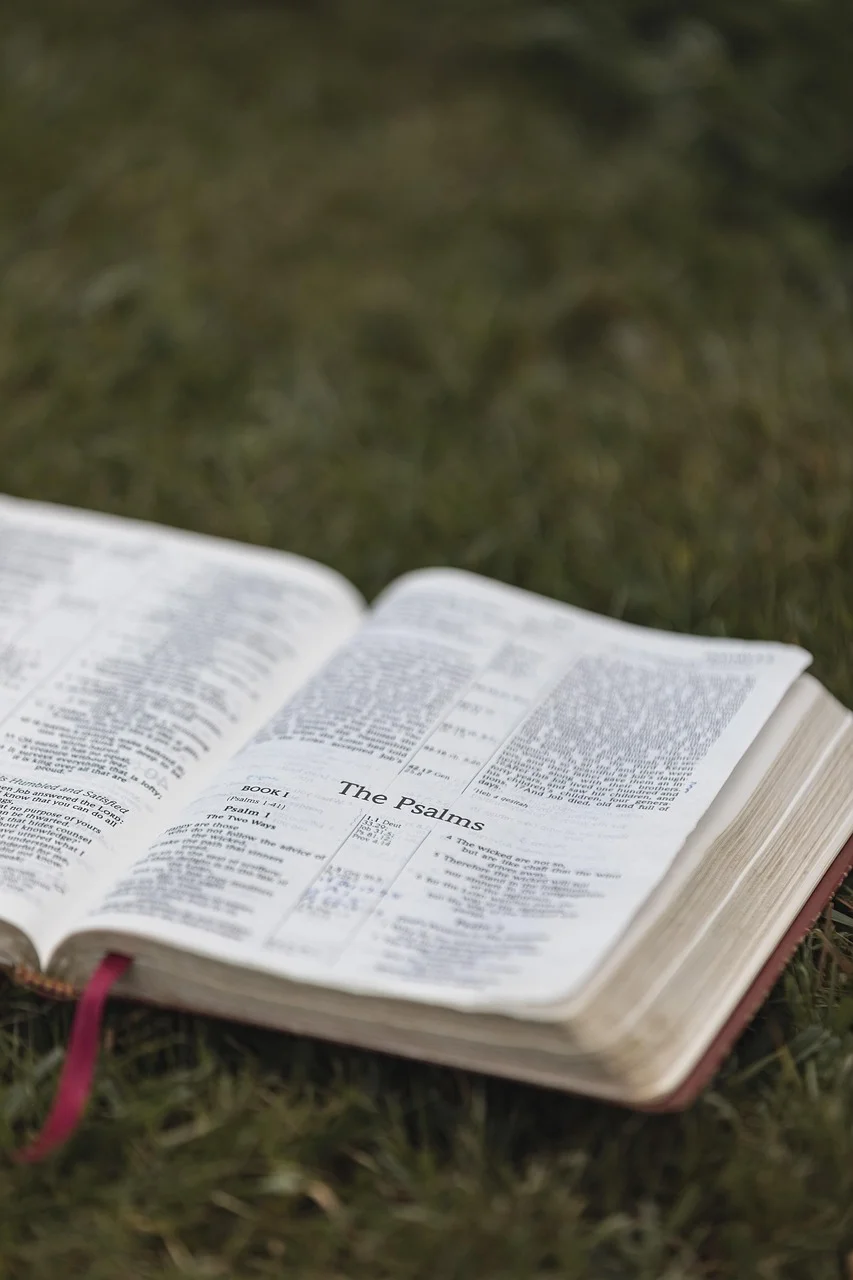
It usually begins with a good question.
Someone raises a difficult issue. It might be about sexuality, money, social media, artificial intelligence, online anger, consumerism, or one of the many modern dilemmas that seem to arrive faster than we can think properly about them. Then someone says it.
“But what does the Bible say?”
On the face of it, this is exactly the right question. Christians should care what the Bible says. If Scripture does not shape our thinking, then something else will. Usually something louder, shallower, and with a much better marketing department. But there is a problem. The Bible does not mention most of the things that fill our modern lives.
There is no verse about Instagram, nor is there a commandment about cryptocurrency. There is no apostolic guidance on dating apps, online outrage, digital identity, artificial intelligence, or whether checking your phone before morning prayer is technically a sign of spiritual collapse.
This can make us anxious. We want the Bible to speak, but often we really want it to decide for us. We want a line. A ruling. A statement. A verse we can underline and point to and say, “There. Done.”
Sometimes Scripture does give us that kind of clarity. There are commands we do not need to make complicated. Do not murder. Do not steal. Love your neighbor. Care for the poor. Tell the truth. Forgive. Seek justice. Walk humbly. But much of life does not arrive with a neat label attached. Most of our moral decisions happen in the grey and ordinary places where motives are mixed, consequences are unclear, and no biblical writer has given us a direct sentence to copy and paste into modern life.
So what do we do then? For some, the answer is to make the Bible into something it never quite claims to be: a complete rulebook for every possible future scenario. But what if Scripture was never meant to spare us from discernment? What if it was meant to form us for it?
We Like Rules Because Rules Feel Safe.
I understand the appeal of rules, I really do. Rules create boundaries and tell us where we stand. They reduce ambiguity, and ambiguity can be exhausting. A clear rule can feel like a handrail on a steep staircase. You may not love the staircase, but at least you know where to hold on. But rules can also become a way of avoiding responsibility.
If I have a rule for everything, I do not need to think or listen too carefully. It does not require me to examine what is happening in my heart. I simply need to find the correct line, stay on the correct side of it, and, if I am feeling especially religious, perhaps point out where everyone else has gone wrong. That is one of the reasons modern Christian debates can become so heated. The presenting issue might be sexuality, money, technology, politics, or something else entirely, but underneath it, there is often a deeper anxiety. We are frightened of getting it wrong. We are worried that freedom is turning into chaos. We may think that if there is no clear rule, everything becomes a matter of personal preference. So we reach for certainty. We say, “The Bible is clear,” sometimes when what we mean is, “My interpretation feels safe.” The trouble is that the Bible has always required interpretation.
The Bible Has Always Needed Interpreting.
This is not a modern problem caused by people spending too much time on the internet. Interpretation is built into the life of Scripture itself. Take the Sabbath. The commandment is clear enough: keep the Sabbath holy. Do not work. Rest. Remember that you are not a machine, a slave, or a god. It is beautiful. But then comes the next question: what counts as work? Can you cook? Can you carry something? Can you help your neighbor if they are injured? If helping them counts as work, are you breaking the Sabbath by showing mercy? Or are you breaking the command to love your neighbor by refusing to help?
This is not nitpicking. This is the complexity of trying to live faithfully. The commandment has to be applied in real situations involving real people with real needs.
In the world of Jesus, this work of interpretation was often described using the language of binding and loosing. To bind something was to forbid it. To loose something was to permit it. Rabbis did this as they taught people how to live Torah in the messy circumstances of daily life.
So when Jesus says to his disciples, “Whatever you bind on earth will be bound in heaven, and whatever you loose on earth will be loosed in heaven,” he is not handing them a religious weapon. He is entrusting them with responsibility.
Jesus does not give his followers an exhaustive manual for the next two thousand years. He gives them his teaching and example. He also leaves them with his Spirit, one another, and the responsibility to discern what faithfulness looks like in the world they actually inhabit.
Here is the thing: He trusts them to think.
That may be one of the most frightening and overwhelmingly beautiful things about the Christian faith.
Wisdom Is What We Need When Rules Run Out
The Bible contains laws, but it is not only law. It also contains wisdom. That matters because wisdom is what we need when rules run out. Wisdom helps us navigate situations where there is no direct command, no obvious precedent, and no simple way to avoid the hard work of judgement.
Proverbs does not read like a legal code. It trains us to notice patterns in the world. It teaches that laziness has consequences, words have power, greed corrodes the soul, integrity matters more than wealth, and that the company we keep really does shape the people we become. It rarely shouts. More often, it invites us to pay attention.
Ecclesiastes adds something even more challenging. It reads like the friend who listens patiently to your overconfident moral theory and then politely asks whether you have considered that life might be stranger than your spreadsheet allows.
James describes wisdom not as cleverness, but as character. Wisdom from above is pure, peaceable, gentle, willing to yield, full of mercy and good fruit. In other words, wisdom is not simply knowing the correct answer. It is becoming the kind of person through whom goodness can be recognized and practiced.
Then there is Jesus.
In the Sermon on the Mount, Jesus does not merely repeat the rules. He goes beneath them. Do not murder, yes, but what about anger? Do not commit adultery, yes, but what about lust? Do not perform your righteousness in public, yes, but what about the part of you that desperately wants to be admired for being spiritual?
Jesus is not making faith easier. He is making it deeper.
A rule can tell you where the boundary is. Wisdom asks what kind of person you are becoming as you walk towards it. And that question is deeply relevant to our lives, right now.
Scripture speaks, but often it speaks by training our sight. It gives us lenses.
Paul Does Not Stop at “Am I Allowed?” Paul understood this.
In one of his most striking lines, he tells the Corinthians, “All things are yours.” It is an extraordinary statement of Christian freedom. The world is not a cage. Christ has set us free. Believers do not belong to fear, superstition, or the endless anxiety of trying to earn God’s favor. But Paul is far too wise to leave freedom there.
Elsewhere, he repeats what, in modern terms, might have become a meme among the Corinthians: “All things are lawful for me.” Perhaps they liked the sound of that, as most of us would. It has the attractive ring of spiritual maturity while conveniently allowing us to do whatever we already want. But Paul immediately complicates it.
“All things are lawful,” he says, “but not all things are beneficial.”
“All things are lawful,” he says again, “but not all things build up.”
In other words, permission is not the end of Christian ethics. It is barely the beginning. Paul is not interested in a freedom that simply asks, “Can I?” His questions are deeper and more searching. Does this benefit? Does it build up? Does it enslave me? Does it wound someone else’s conscience? Does it serve love? Does it reflect the self-giving life of Jesus? We often want to ask, “Is this allowed?” Paul pushes us towards, “What is this doing?” What is this habit doing to my attention? What is this purchase doing to my relationship with money? What is this freedom doing to someone more vulnerable than me?
This does not give us easy answers. In fact, it often makes things more demanding. A rule can sometimes be obeyed without much love. Wisdom demands more from us.
The Danger of Mistaking Our Reading for God’s Voice
There is, however, a warning here.
If interpretation is unavoidable, humility is essential.
The history of Christianity gives us painful examples of people reading the Bible with great confidence and still getting things profoundly wrong. Slavery is one obvious and sobering example. Christians once defended slavery from Scripture. They quoted texts, constructed arguments and believed they were being faithful whilst doing it.
The frightening lesson is not that they ignored the Bible. It is that they used the Bible while missing the heart of it.
Over time, Christians came to read those texts through the wider biblical witness: the image of God in every person, the Exodus story of liberation, the command to love neighbor, the ministry of Jesus to the oppressed, and Paul’s claim that in Christ the old hierarchies had lost their ultimate power.
The text did not change, but the interpretation did.
Examples like this should make us careful.
Whenever we say, “The Bible clearly says,” we should perhaps pause long enough to ask whether we are reading with the grain of Jesus’ life. Does our interpretation produce love, joy, peace, patience, kindness, goodness, faithfulness, gentleness, and self-control? Does it protect the vulnerable? Does it tell the truth? Does it look like Christ?
Because the goal is not simply to win arguments about the Bible. The goal is to become people shaped by it. Not Abandoned, Entrusted.
We should keep asking, “What does the Bible say?” It remains a vital question. But perhaps we need to ask it more deeply. Not merely, “Is there a verse that mentions this?” but, “What kind of people is Scripture forming us to become?”
It requires us to ask questions. The kind of questions that are slower than rules. They require prayer, conversation, humility, study, community, and the willingness to admit that we may not see everything clearly.
They do not give us the instant satisfaction of certainty. Instead, we have to do the slower work of growing in wisdom. Which may be precisely the point. Maybe the Bible is an invitation to maturity.
God has not left us with nothing. He has given us Scripture, Spirit, community, conscience, worship, prayer, the cries of the vulnerable, and above all, the life of Jesus. That may be less tidy than a rulebook, but it may also be more faithful.
Because the Bible was never meant to absolve us of responsibility. It was meant to form us into people who could carry it wisely. And perhaps that is why Scripture does not simply tell us what to do. It teaches us how to see.














Comments (0)
Facebook Comments (0)