
A Tale of 2 Siblings - Osas and Abobs
 admin
Aug 5, 2026
164
0
admin
Aug 5, 2026
164
0
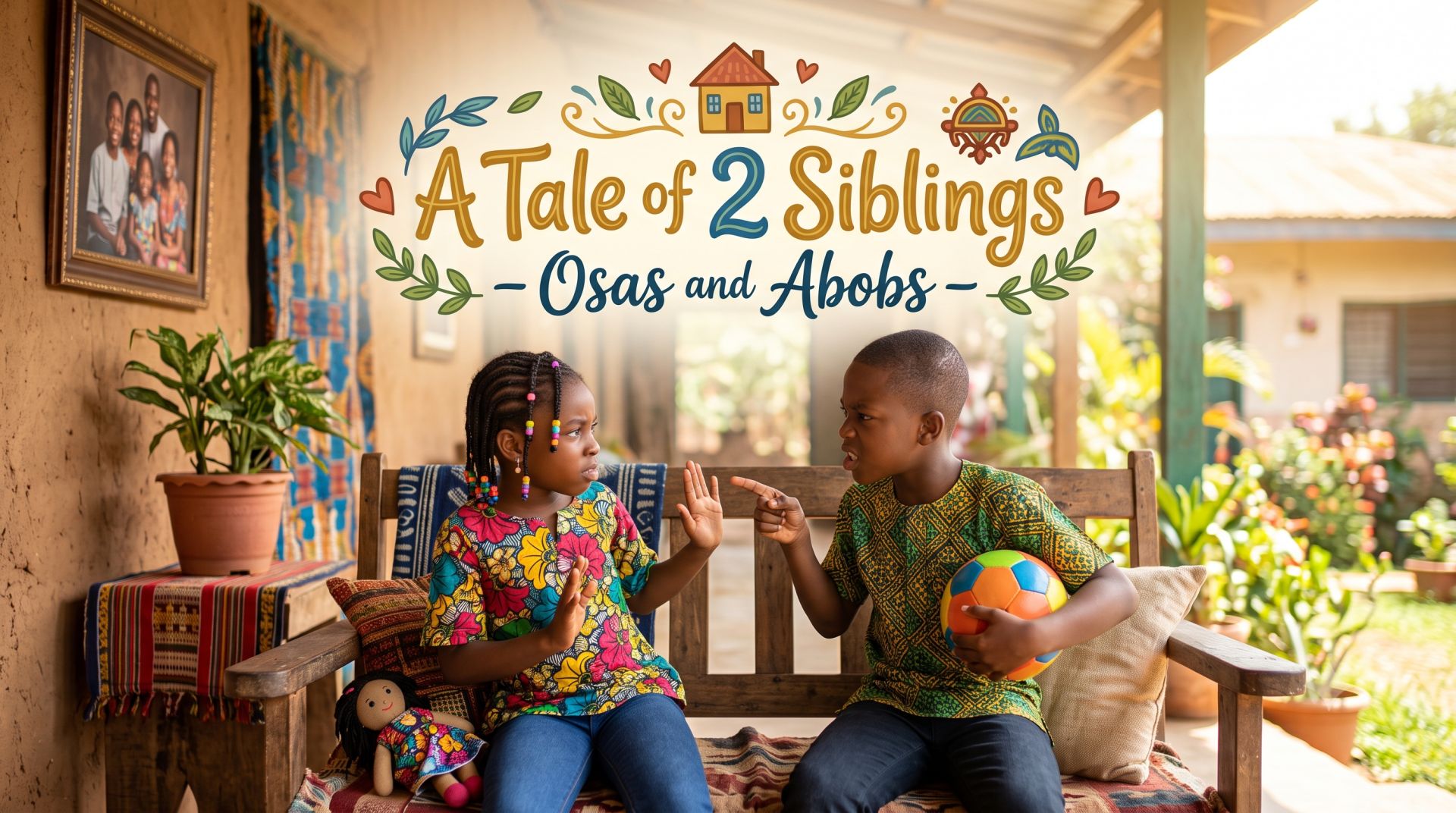
Two siblings.
One father.
Different tutors.
One took the tutor his father chose.
The other picked his own.
It is the old story of children: some step neatly into the family business their parents map out for them; others strike out on a path of their own making, outside the family line.
And so they remain forever at loggerheads, locked in ideology, life choices, pathways, each convinced he alone is the better son for the road he walks.
Osas believes father’s love holds steady no matter what he has done. He believes he has access to all father owns. He does not need to perform anything extra or special. He is father’s son, and that alone carries certain rights.
Abobs believes a well-behaved child alone is worthy of father’s love and acceptance. One who misbehaves is unworthy and should expect to be treated as such.
Abobs watches Osas and seethes. Osas is taking father’s love for granted. How can a child remain this irresponsible? It is fine for a toddler, but a child must mature and become a true son.
Osas answers that accepting father’s love does not make him irresponsible. He would rather move with an air of love toward father and feel free to come into his presence than live afraid and self-conscious.
Abobs insists he is neither afraid nor self-conscious. He simply understands father’s nature, and is very much like father in that essence.
Osas shakes his head. He spends more time in father’s presence than Abobs ever does, not because father demands it, but because even on the days he has been naughty, he still walks in boldly to say hi.
Abobs cannot see it. He always appears fully dressed, ceremonial, formal, a little too stiff, a little too performative, whenever he approaches father. He treats every visit like a rare, once-in-a-lifetime event. For him, this is how it must be.
Osas simply strolls in. Day or night makes no difference. Ceremonial garb or work clothes stained with grease or even worse. Meh. Father is father. He is not about to stop being father.
This is where it grows interesting. Osas finds a consistency in father. Every time he arrives, no matter how he is dressed or how he looks, he receives a hug, words of encouragement, a smile, and the clear confirmation of love. Sometimes a scolding comes, but it is always followed by the smile.
Abobs also meets father’s love and smile on the occasions he goes in to say hi.
Yet the frequency of that experience rests entirely on how often he chooses to enter father’s presence. And on the days he arrives with lipstick smeared on his collar, a hickey on the neck, palm-oil stains from dinner on his shirt, a burn mark from the iron, or color runs from mixing clothes in the wash, he becomes extremely self-conscious and self-absorbed.
He fixates on the smear and the stain, and cannot pay attention to father’s love.
Should father scold him in such a moment, Abobs immediately justifies his earlier trepidation and escalates the scolding.
Often he helps things along: he scolds himself first, punishes himself, and justifies it by claiming he is only doing what father would have done to him anyway.
Abobs does not see that he has blinded himself to father’s true nature. He confuses his own self-imposed expectations and punishments with father’s desire. He props up that perception with every tale of father’s scolding, stripped of the surrounding love and the actions that came before it.
Because Abobs sees father as volatile, aggressive, and vengeful at the slightest stain, Abobs, being true to the nature he has assigned father, becomes that way himself. He turns into the aggressor among the siblings, the gatekeeper of cleanliness, Mr. Clean himself, the self-appointed Judge Dredd.
Recently Osas and Abobs have sunk into an extended bickering, dragging every other sibling into the fight. Each assumes he is doing father’s desire, while father sits there wondering, “Why can’t they simply focus on me and make me their story without dragging the other into the mud?”
The fun part is that after the dragging, both Osas and Abobs return to father to toot their own horns. Abobs because he feels justified and has been a good soldier for father. Osas because he goes to father whether he has been naughty or nice.
Which would you rather be?







Comments (0)
Facebook Comments (0)