
Born Blind. Whose Fault?
 admin
Oct 6, 2026
6
0
admin
Oct 6, 2026
6
0
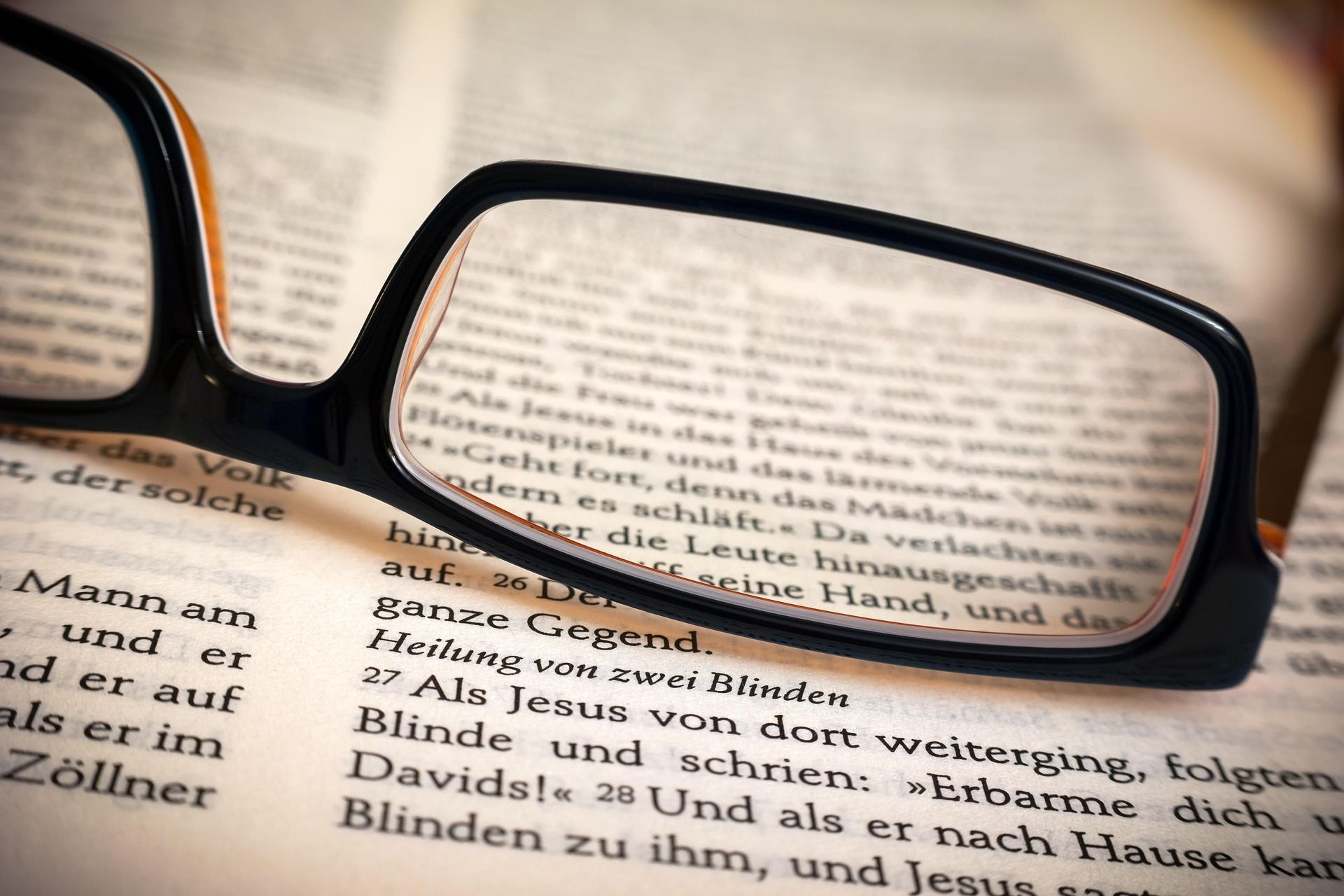
There is a miracle in John’s Gospel that I thought I understood for years.
A man has been blind from birth. Jesus sees him, spits on the ground, makes mud and puts it on his eyes and tells him to wash in the Pool of Siloam. The man does exactly that and comes back able to see.
It is one of those Gospel stories whose basic shape is so familiar that it is easy to assume the important part is obvious. A blind man could not see. Jesus healed him. The miracle demonstrates something about Jesus’ power, and everyone moves on.
Except almost nobody in the story moves on.
The man’s neighbors argue about whether he is really the same person. The religious leaders investigate the healing because it happened on the Sabbath. His parents are dragged into the dispute and become frightened about the consequences. The healed man is questioned repeatedly until eventually he is thrown out.
The healing itself occupies surprisingly little space, but what fascinates me is everything that happens afterwards, because John allows us to watch something developing in front of us. The man begins the story knowing almost nothing about Jesus. By the end, he is kneeling before him in worship.
His belief in Jesus does not produce the miracle. In fact, in this story, the miracle comes before he even knows who Jesus is.
The Question Everyone Wants Answered
The chapter begins not with the blind man speaking, but with the disciples discussing him. As Jesus and his followers walk past, they see someone who has been blind from birth and ask:
“Rabbi, who sinned, this man or his parents, that he was born blind?”
It is an extraordinary question when you stop to think about it. The man is sitting somewhere nearby, and the disciples immediately turn his suffering into a theological problem.
Someone must be responsible. Perhaps his parents had done something terrible. Perhaps, somehow, he himself could be blamed. However, they imagined it working, the assumption underneath the question is familiar: suffering must have a cause, and if we can identify it, perhaps the world will make sense again.
I suspect that instinct has never really left us. When something goes badly wrong, one of our first questions is usually why. Was it something I did? Did somebody else cause this? Did I make the wrong choice? Is God trying to teach me something?
There is something strangely comforting about believing everything can be explained. Even a painful explanation can feel preferable to no explanation at all. Jesus refuses the premise.
“Neither this man nor his parents sinned,” he replies.
Jesus is not claiming that human actions never have consequences. Clearly, they do. He is challenging the assumption that this particular man’s suffering can be neatly traced back to somebody’s moral failure. Instead of speculating about the past, Jesus turns their attention towards what God might do in the present.
Sometimes our need to explain suffering can prevent us from seeing the person who is actually suffering.
The Man Who Never Asked to Be Healed
Then something happens that I had overlooked for years.
The blind man never asks Jesus for anything.
At least, John does not tell us that he does. There is no declaration of faith, confession that Jesus is the Messiah, or desperate request for healing. In fact, the man does not say a single recorded word before Jesus acts. Jesus just sees him, approaches him, makes mud, spreads it on his eyes and tells him to wash in the Pool of Siloam. Only then does the man do something.
He goes.
Imagine being blind from birth and having a stranger rub mud onto your eyes before telling you to go and wash in the Pool of Siloam. It does not sound particularly promising. Yet he goes to Siloam, washes and comes home seeing.
His understanding will come later. For now, he simply takes the next step.
Nobody Knows What to Do with Him
You might expect the next scene to involve celebration.
Instead, it involves utter confusion. The man returns able to see, and the people who have known him for years cannot agree about whether he is actually the same person. Some say he is, whilst others insist, he only looks like him. Eventually, the man has to intervene in a debate about his own identity.
“I am the man.”
There is something wonderfully human about this part of the story. For years, everyone has known who he is. He is the blind man. More specifically, he is the blind beggar. That category has become so fixed that when reality changes, some people find it easier to question his identity than reconsider their assumptions.
“The Man They Call Jesus”
When his neighbors ask how all this happened, the man gives them his first description of Jesus.
“The man they call Jesus made some mud and put it on my eyes.”
That is all. He does not call him the Messiah or Son of God. Not even a prophet. Just the man they call Jesus.
This is what makes John 9 so interesting. If we read only the ending, we might assume the man possessed extraordinary faith from the beginning, but the truth is, he did not. In fact, he barely seems to know who Jesus is. When they ask, he answers with admirable simplicity:
“I don’t know.”
Something extraordinary has happened to him, but he cannot yet explain it. He does not know where Jesus is, what theological category Jesus belongs in or what any of this ultimately means. He only knows what happened.
And John seems perfectly happy to leave him there for a while.
Faith Growing Under Pressure
But the chaos surrounding this miracle continues. Now, the neighbors take him to the Pharisees, and the atmosphere changes.
The healing happened on the Sabbath. Some of the religious leaders, therefore, conclude that Jesus cannot possibly be from God. Others are less certain. How could a sinner perform a sign like this? So they ask the man what he thinks, and now his answer has changed.
“He is a prophet.”
That is quite a step from “the man they call Jesus.” Nobody has given him a theological lesson. Jesus has not explained himself; the man has barely spoken to him. Instead, his understanding is developing as he is forced to think about what has happened.
The questioning continues. His parents are summoned and confirm that he really was born blind but quickly distance themselves from the controversy. John tells us that they are frightened about what might happen if they become too closely associated with Jesus.
“He is of age,” they say. “Ask him.”
Which is the best ‘shrug of the shoulders’ you might read in the Bible. So, the man is questioned again, and this time the leaders tell him that Jesus is a sinner. That is when he gives one of the greatest answers in the entire Gospel:
“Whether he is a sinner or not, I don’t know. One thing I do know. I was blind, but now I see.”
He does not pretend to know more than he knows. He does not offer a complicated theological defense.
He simply refuses to deny what has happened to him.
When Faith Finds Its Voice
The longer the questioning continues, the bolder he becomes.
At one point, they ask him, yet again, what Jesus did. He tells them he has already explained it, then asks whether they want to hear the story again, perhaps because they would like to become Jesus’ disciples too. Tell me you are not smiling now. I personally suspect sarcasm is underrated as a biblical gift.
Predictably, this does not improve the atmosphere.
They insult him and insist that they do not even know where Jesus comes from. Now the formerly blind beggar begins teaching the religious experts.
“Now that is remarkable!” he replies. Nobody has ever heard of someone opening the eyes of a person born blind, he argues. If this man were not from God, he could do nothing.
Notice how far he has travelled.
First: The man they call Jesus.
Then: He is a prophet.
Now: He is from God.
His understanding is becoming clearer with every encounter.
But this clarity has consequences, and after all that, the leaders throw him out.
Jesus Finds Him Again
Then John includes perhaps my favorite detail in the whole chapter.
Jesus hears what has happened and finds him. That matters because the man has spent most of the chapter defending someone he has barely met. He has endured questioning, ridicule and rejection because he refuses to pretend that something did not happen when he knows perfectly well that it did.
Yet despite everything he has said about Jesus, his understanding is still incomplete. So, Jesus comes looking for him, and only now does the conversation move towards belief. Jesus asks whether he believes in the Son of Man.
The man replies:
“Who is he, sir? Tell me so that I may believe in him.”
Even now, he does not fully understand. Jesus tells him that the person speaking to him is the one.
Finally, the man says:
“Lord, I believe.”
And he worships him.
The confession comes at the end, not the beginning.
The Man Who Learned to See Twice
By now, I hope you can see that John has turned the entire story upside down.
The man who began physically blind gradually sees more and more clearly. Meanwhile, the people who began the story convinced that they could see becoming increasingly unable to recognize what is happening in front of them. The man admits what he does not know and keeps learning. The religious experts insist that they already know, and their certainty begins to blind them.
That is why Jesus ends the chapter talking about sight and blindness. The physical miracle has become a much larger metaphor.
There is a kind of blindness that has nothing to do with our eyes.
It is possible to possess knowledge and still refuse to see. It is possible to know Scripture and become so attached to our interpretation of it that reality itself becomes threatening. It is also possible to be so certain about where God can and cannot be found that when something unexpected happens, our first instinct is to explain it away.
Perhaps the most spiritually dangerous sentence is sometimes not “I don’t know.”
Perhaps it is “I already know.”
Faith Does Not Always Begin with Certainty
For years, I heard faith described as though everything had to happen in the correct order. First, you believe, then trust, and God might act. Sometimes that may describe the experience well.
But it certainly does not describe John 9.
Jesus does not wait for the blind man to understand him. He does not demand a statement of faith before healing him or ask whether the man’s theology is sound enough. Jesus simply sees him and acts, and it is only afterwards that the man begins trying to understand what has happened.
That does not mean faith is unimportant. By the end of the story, faith matters enormously. But John allows it to emerge slowly and organically. The man moves from uncertainty to recognition, and every stage is allowed to be what it is.
That feels much closer to the experience of many people I have known.
Faith does not always arrive as sudden certainty. Sometimes something happens that we cannot quite explain. Something changes. We begin asking questions we had never asked before. An old assumption no longer seems adequate. In those moments, we catch a glimpse of something larger than ourselves, even though we may not have the language for it yet.
John suggests that this does not mean nothing is happening. We may simply be somewhere in the middle of the story.
He does not begin as a theologian. He begins as someone sitting beside the road whose life is changed before he understands why. His sight arrives immediately, but understanding takes considerably longer.
By the end, he reaches the words, “Lord, I believe.” But Jesus has been at work long before he gets there. He was there when the man knew him only as “the man they call Jesus,” when he thought Jesus must be a prophet, and when he began insisting that Jesus must somehow be from God.
Perhaps that is the detail I had missed. This is certainly a story about a man learning to see. But long before the man sees Jesus clearly, Jesus has already seen him.













Comments (0)
Facebook Comments (0)