
Leading With Wisdom In A Digital World
 admin
Jul 8, 2026
215
0
admin
Jul 8, 2026
215
0
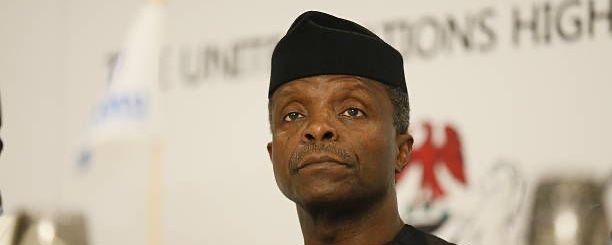
I am to speak on the topic, leading with wisdom in a digital world.
Leading with wisdom in a digital world.
I hope you can hear me well. Let me begin by stating the obvious just for emphasis. Leadership at any level must fully appreciate the incredibly profound implications of the digital age on our lives, on our faith.
The economy, social well-being, and even our individual autonomy, our individual existence as human beings. A few years ago, as a lawyer in practice in Nigeria, my partners and I sued the tobacco companies in Nigeria, the main tobacco companies at the time, Philip Morris and British American Tobacco, and we sued them on behalf of the Nigerian government, federal and state governments of Nigeria. Our case was that the tobacco companies deliberately addict young smokers and that many such young people died of cancer or several ailments, which cost the government huge sums of money in health care costs.
Now, we were following precedents that were laid down by US courts where tobacco companies had been sued here in the US and found liable for deliberately causing the addiction of smokers. In other words, they had known – these are the tobacco companies- they had known for decades that nicotine is addictive, and they were deliberately designing cigarettes to cause nicotine addiction. Now the clearest statement of this, the clearest evidence of this came from a case that was decided in 2006, a case called 'United States and Philip Morris, USA ', where a US District Court found that major tobacco companies knowingly actually manipulated nicotine levels in cigarettes to get users addicted. The court also found that the cigarette companies, despite the internal evidence that they already had from their own research, they pretended not to know that nicotine is addictive, and they deliberately misrepresented the addictive nature of smoking.
This same court, this US District Court, found that these cigarette companies had for decades engaged in a scheme to deceive the public about the actual addictive nature of cocaine, of nicotine. Now, after imposing huge damages on them, the US court then said and ordered these tobacco companies to put all the documents that had been revealed in the process of the case, in the process of discovery, which is one of the processes that you undertake when you are prosecuting a case. The court said all of the evidence that was gathered, all of the documents that were gathered, should be put in two depositories. One in the US, another in Gibraltar. The one in Gibraltar was for the Africa-related documents. So in any case, any document that had to do with Africa that was revealed in the course of the case here in the US was deposited in Gibraltar.
My firm and, uh, several of our collaborators were able to access the data in Gibraltar and all the evidence in Gibraltar. That's how we got to know the incriminating evidence against the tobacco companies in Nigeria. Their own internal documents showed how they planned to addict children from the age of nine in Nigeria and how they organised concerts and gave out what they called 'starter packs', small packs of cigarettes, to underage children in order to addict them. The point of this rather long story is that using addiction as a marketing tool has been used by big business for decades. Indeed, if you can be addicted to a product, you have become a source of unending wealth to the business that got you addicted.
Now fast forward to 2026 here in the US again in a well-publicised case called KGM and Meta. Meta, of course, as you know, uh, the big uh tech company, a teenage plaintiff here in the US this year, sued the owners of Instagram. They sued Meta, the owners of Instagram. They sued Google, the owners of YouTube. Snap Inc., the owners of Snapchat and TikTok, alleging that these platforms were deliberately designed to be addictive. This teenager alleged that features such as infinite scrolling, you know, how you can just keep scrolling and scrolling on TikTok. You know how those things are. Algorithmic recommendations, likes, you know, and validation systems and push notifications were intentionally built to maximise engagement to exploit the psychological vulnerabilities of adolescents and to engage and encourage the compulsive use of these platforms. She claimed that she used Instagram and YouTube compulsively over several years during which their algorithms allegedly promoted harmful content related to body image and self-esteem.
The plaintiff claimed, this young lady, that this led to serious mental health conditions, including depression and anxiety disorders, which required medical treatment. and she gave evidence of the medical treatment that she had to go through. Now this case emphasised that these companies, Meta, Google, etc., knew of the risks from their own internal research. They knew of the risks, and yet they failed to warn users, especially minors, and they continued optimising their platforms to maximise engagement at the expense of users' well-being. So in the cause of this case, uh, Snap Inc., the owners of Snapchat, settled out of court before trial. They didn't want any trouble. TikTok also very wisely settled out of court before trial. But Google and Meta remained in the case, and they were both found liable by the court. So, like the tobacco cases, the court agreed that the social media platforms deliberately designed their platforms to be addictive, that they knew from their own internal research that this will be harmful, especially to young users, and they failed to warn users of their platforms about these dangers. Of course, damages were awarded against them.
We are in the midst of some of the greatest developments in technology in generations and also one of the most precarious moments in generations. A small number of powerful tech companies significantly shape global communication. They shape economies and behaviour. And incredibly, their algorithms usually control what we see and hear, how we see, and how we hear, and they manipulate what and how we think. They control the use of content and can power narratives as they choose. How about infrastructure? Digital infrastructure is the hidden foundation of modern life, and all of us know that. So we compare electricity to what the internet is today and roads to what data is. A few large companies such as Amazon, Microsoft and Google provide the systems that store data, run applications and power websites, banks, businesses, hospitals and government services. Government relies on Starlink, some of them, I mean the US government and at some point Ukraine, for what the militaries call C4ISR. C4ISR is command, control, communications, computers, intelligence, surveillance and reconnaissance. Government relies on one company owned by one man, well, owned beneficially by one
The same is true for artificial intelligence. Modern AI needs huge computing power, large amounts of data and specialised technology. And much of this comes from the same companies. So if you want to build advanced AI today, you usually have to rely on these same companies. And this gives these companies, as you can imagine, significant influence. They help shape how technology develops. They help shape how businesses grow. And even what countries are able to do in simple terms, these companies are not just building apps; they are running the digital engines of modern life, and this gives them enormous influence over economies and over national and international security.
Today, the global internet population, we're told, is somewhere in the order of 5.3 to 5.5 billion people. Almost all of humanity is online or about to get online. And these companies map all of humanity on their various platforms. The data available to these few companies is not just biodata but also behavioural data. And this is tracked by our clicks, our likes, our watch time, our location, our IP tracking, what you like, what you don't like, and your preferences are tracked by your interests, what you click on and the purchases that you make. And they also have our social graphs. Who you know, who your friends are. This is also very well-tracked.
So while the world has seen powerful corporations in history, this is completely different. This is the combination of the incredible global reach and the real-time behavioural data on billions of people and control over infrastructure that actually underpins economies and governments. A handful of tech companies now have perhaps the greatest influence by a few, over our world in human history. A massive, all-encompassing system is with us.
A digital kingdom is here with its own leadership. Let's elaborate a little more.
Every day, billions of people log onto platforms owned by these companies: TikTok, YouTube, etc. We scroll, we like, we share. Of course, it feels harmless. It feels ordinary. But behind every scroll is a decision. And the decision is not ours. It's not yours or mine. But it's a decision of an algorithm. And these algorithms are not designed to show us the truth. They are designed to capture our attention and to keep us engaged. So to make you stay and curate your reality - a personalised reality, they show us most of what we agree with and what excites us or sometimes what provokes us, until slowly and subtly you are no longer seeing the world necessarily as it is. You are seeing a version of the world designed specially for you. But it goes deeper still. They set and reinforce our thought processes.
In the digital world, as you know, repetition becomes truth. The more you see something, the more familiar it feels. And the more familiar it feels, the more likely you are to believe that it is true. Not because it's necessarily true, but because it is repeated often enough. Over time, opinions begin to feel like facts. And this is the most profound, in my view, mass brainwashing with the full consent of the brainwashed in human history. All of us fully consent to this arrangement.
So the battlefield of this age is no longer only physical or political. It Is not merely about land or power or resources. The battlefield is the human heart and the human mind. And scripture warns us in these times in Proverbs 4:23. And scripture warns us. It says, "Above all things, above all else, guard your hearts, for everything you do flows from it." The Bible doesn't say, "Guard your wealth above all things." It doesn't say, "Guard your influence or your success." It says, "Guard your heart." because from it flows everything. Your choices, the direction of your life, and indeed destiny.
Yet in this digital age, the heart is under constant pressure. Not always through anything that's obviously evil, but through unceasing distraction and subtle formation. Notifications are forever interrupting our thoughts. Endless streams of content compete for our attention. Opinions, fears, desires, ideologies flow towards us without pause.
In the past, some things required deliberate choice. They now enter our lives uninvited and often unexamined. And so the question of this age is no longer simply what do you choose to believe? That's no longer the question. The deeper question now is what is shaping you without your awareness. How is your belief being shaped in subtle ways without your knowing it?
Jesus warned. He says, "Take heed what you hear." Mark 4:24. In Mark 4:24, Jesus said, "Take heed what you hear." What you hear determines how much or how well you know. In other words, you must hear with discernment and wisdom. Because again, as Jesus said in Luke 8:18, he says, "Therefore take heed how you hear, how you hear. For whoever has, to him more will be given, and whoever does not have, even what he seems to have will be taken away from him." The hearer with discernment will grow in knowledge and wisdom. The careless hearer will lose everything long and short. Faith comes by hearing. We're told also in scripture. But also fear, anxiety, and apprehension come by hearing and worse by seeing. And today we hear and see and hearing all at the same time. And fear of this kind is usually inspired by subtle lies from the father of liars, the devil. because it couldn't possibly come from God. For God has not given us a spirit of fear, but of power, of love, and of a sound mind. 2 Timothy 1:7.
The young girl in that KGM case that we have talked about earlier proved with medical evidence that the platforms that she was listening to, that she was engaged with, did not just keep her scrolling. They pushed content that exploited her insecurities and encouraged comparison with her own imperfect body features. She was shown endless images of perfect bodies, beauty trends, and luxury lifestyles and viral exchanges that seemed exciting but were often harmful. The algorithms amplified this, constantly showing more of what she engaged with. Over time, this created a feedback loop, reinforcing very unrealistic standards. The result was low self-esteem, anxiety, depression, and compulsive use. So, what feels like harmless scrolling is actually a system that's designed to capture attention and, in the case of vulnerable young people, can seriously damage mental health.
But today there are all sorts of influencers on these platforms. There are lifestyle influencers who display luxurious living and even influence pastors sometimes to start showing off clothing and cars. I've seen a few; I'm sure you've seen a few, uh, on Instagram. There's carefully created hate content as well that can radicalise quickly and direct you to where to find like minds. We had cases of prominent Nigerians whose children joined al-Qaeda, and another joined ISIS, and you know some of the facts of all that are out there, uh, for us to see. They were radicalised on social media.
But the greater danger, the greater danger aside from all of these influencers of various kinds, the greater danger is the loss of the ability to be introspective. The loss of that ability to have time to even discern. Because beyond addiction and exposure to harmful content, social media also reshapes how our minds work. Constant notifications, endless scrolling and algorithm-driven feeds train our brains to seek quick rewards. And this just makes it harder to focus, to think deeply or to reflect quietly. Even meditation or prayer, which require stillness and sustained attention, sometimes become difficult because the mind is conditioned to jump from one stimulus to the other.
In this digital age, the attention of our hearts and minds is under constant pressure and what we give our attention to shapes what we become. A distracted mind cannot sustain a discerning spirit. When Elijah encountered God, and I'm sure some of us are familiar with the story, God was not in the earthquake nor the fire. It was in the still small voice. 1 Kings 19:11-12, in the still small voice. Yet our lives are filled with so much noise. How will we even hear any voice at all? Let alone a still small voice. Jesus himself withdrew to quiet places to pray. And there's so many examples of when he withdrew just for prayer. He understood that clarity requires stillness.
I found, and this is personal, that when I read my Bible from my work iPad, the iPad that I use for work, I'm just attracted to one news item after the other. I'm trying to read my Bible, but then there's just one news item. Oh, what's going on there? I look at that, I look at that, look at that – another notification, one other notification about something important. I'm trying to read my Bible, but there I am going in all these different directions. I had to get a fresh, clean iPad for my Bible only in the end because I realised that I was fooling myself. I was hardly able to read the Bible with any kind of concentration. But today, you know, my son, for instance, and my two daughters use their phones for the Bible. So I keep asking them, 'Hey guys, this phone of yours, if everything is on this phone, how do you use, how can you read your Bible from this phone with all the notifications?' Everything coming in at the same time. I think that we need to teach new formulas for quiet times in this digital age. We simply have to find a way of doing this.
And now as we step into this emerging AI age, new questions are arising with AI.
One of the ways by which we give God glory is in the expressions of our creativity: when we write excellent material, we compose music, we do great artwork. Now artificial intelligence can do all of these things, even writing sermons. So these AI tools, especially the generative AI tools, are getting more intelligent by the minute, and many of us are turning to these tools for counsel in matters that will ask God about or seek counsel for. Our first recourse is to charge GPT or perhaps Claude or some other tool.
So we must ask ourselves what happens when our first response on matters of wisdom is a machine instead of the spirit of God. AI can imitate insight, but it cannot pray. Well, I haven't, I don't think it prays, but you never know. One thing is certain: it cannot receive from God. It cannot understand the depths of the human heart, and it cannot reveal God's will. So if we begin to depend on machines first, we risk weakening our connection to the true source of wisdom.
And there are real dangers in this. We may begin to rely on technology instead of seeking God even in times of struggle. We may start to believe that AI has authority simply because it sounds wise. And it really does sound wise. many times even though it cannot speak God's truth and that's evident; none of these tools can speak the truth of God and we may forget that while machines can create content, they cannot worship. They don't have a heart. Besides, you can even become emotionally dependent on them; you can become emotionally dependent on these machines I'm sure some of us are familiar with the case of that young man, uh, Sewell Setzer III, the 14-year-old who relied so much on a chatbot and asked the chatbot, 'How can I commit suicide?' and the chatbot was his emotional recourse, his friend and the chatbot advised him on how to commit suicide and even said at some point, 'It is time to come home,' is what the chatbot said. It's the case here, right here in the States.
So how should we respond? We must seek God first. We must continue to pray and pursue his guidance before turning to any other tool. We should use technology to support and enhance all the gifts that God has given us. But we cannot replace them. And we must teach the next generation and teach ourselves that true wisdom comes from God, not from codes.
The issue is that we must preach the true gospel of Jesus Christ. and so important that it is the true gospel of Jesus Christ that we are preaching, not a gospel of consumerism or what is sometimes referred to as the prosperity gospel, a transactional gospel that focuses on giving and getting from God. This is the sort of gospel that is a willing victim of the manipulations of the digital age's quick transactional results. The true gospel is the wisdom of God. It is the power of God, as scripture says, unto salvation for those who believe.
But yet, we can't ignore or avoid technology. There's no way. There's excellent stuff going on. We just saw Demaglow a moment ago. Excellent stuff that we can use technology for, useful stuff. and is responsible for some of the most phenomenal developments in life, in livelihoods, in the quality of life, and in our standard of living. We are living, for instance, now in the most advanced moment in human history. Your smartphone, which all of us have now, the current smartphones, not even some of what we're seeing in the next couple of years, has more computing power. In fact, by some accounts, it has 100 times more computing power than the Apollo 11. That's the first, uh, Apollo flight that took men to the moon in 1969. In other words, men got to the moon in 1969 with a 100 times less computing power than you have in your phones today. So you can imagine just how advanced we are. And then just think about this guys; That's just somewhere else, you know, and we don't know what's going to happen next. Even a basic calculator app today exceeds Apollo 11's raw computing power. A simple calculator.
Now leaders, in my view, must confront the potentials as well as the dangers of the digital age with the wisdom of God. We must plan. We must prepare. We must anticipate. We are required to cast a vision. We're required to plan. We're required to think ahead. And this is leadership at all levels, whether it is leadership in church or leadership in our businesses.
As a head, you know, I used to have, uh, I used to be in a law firm. As you heard, I co-founded a law firm in Lagos, but I'm now retired from the law firm. And I was speaking to the new management of the law firm when, um, they were explaining to me and showing me their new AI-driven tools for the work of the firm. They now have a ChatGPT interface that, within minutes, can sift through several legal databases and offer summarised opinions based on statute and case law. In other words, they can do the brief that I, the professor, spend hours and days and days trying to do. So, this thing can just do the brief very quickly, much better than I could ever have done it. What used to take days of research can now be done in minutes. And the system can argue with you if you oppose its point of view. And the incredible thing about these systems is that they are actually capable of critical thinking using data resources faster than the human mind. So it's clear that a lot of work that we used to hire lawyers for is now done much faster and more accurately by technology.
And these systems don't get tired. They don't go and leave. They don't ask for extra pay, you know. So I mean, they're just convenient, and you know, they are becoming cheaper and cheaper, like mobile phones. They will soon become available everywhere. They'll soon be commodified like mobile phones. So this means that many entry-level; and I'm talking about the legal profession and even more senior jobs, are going to legal advice that we used to charge for. I remember years ago and would write opinions on doing business in Nigeria and charge, you know, healthy sums. today. I mean, who's going to ask you that kind of I mean, simply ask any one of these uh, uh tools, and they'll give you all of that detail. Those are no longer available.
Even at home, parents have to show leadership and decide what controls to put in place and what counsel to offer. We now have judicial pronouncements that big tech has a strategy to addict us. And you know, if you look at some of what we're seeing, I think it was Australia that recently banned um, the use of, uh, AI phones before the age of 16 or something. And you see the response; parents were so relieved. I was shocked. So parents didn't want to engage their children on these issues, you know, but when the law did it, when the government did it, everybody said, "Yes, that's right. That's correct."
Thought leaders, for instance, in university research policy are dealing with the question, 'What do we do with the cloud and all these, uh, generative AI tools, AI assistance powered by, uh, large language models?' What do we do? How do we examine research for degree purposes when increasingly there are AI tools that are becoming impossible to decipher from what a human being would? I remember a conversation I had with some professors in Stanford at the beginning of last year where the issue was, so how do you supervise your PhD, uh, students now and that was then. A year after, the field is crowded with even more sophisticated generative AI tools. So we have to ask ourselves, what are we going to do?
I wonder sometimes how we're going to deal with the confusion between truth and fiction that AI can create. It's unbelievable what we see today. Today, if you go, there's an AI-generated video of me selling hypertension control drugs, and there's another one where I'm advertising a platform for making quick money. There's an elderly man from Nasarawa State in Nigeria who called me and thanked me very much. He thanked me for taking the problem of hypertension so seriously that I advertise the drugs for hypertension. So it's, I mean, you can imagine, you know, that sort of thing that people believe these things, even people who should know better believe them because, I mean, these things are as real as you can imagine
Telemedicine? And you can't; there's no way of discounting the great work that technology is doing, especially in our own part of the world. Telemedicine lets rural hospitals, for example, leapfrog traditional barriers, enabling doctors now to consult specialists. They can review scans and lab results. They can monitor patients remotely and provide, uh, advanced care in real time. And these services at some point were not available even in major cities. Now they are possible in the most rural areas because of telemedicine.
How about mobile money? Because of mobile telephoning and mobile phone technology, millions in rural Africa, rural Nigeria, who could not be reached by banks now have mobile bank accounts and can make or receive payments and even take and pay back loans. Africa, especially sub-Saharan Africa, is the global leader today in mobile money systems. And some of us are familiar with Impessa, the Kenyan, uh, the Kenyan mobile money app. We have leapfrogged in financial inclusion. How about online commerce? Many small businesses- fashion, furniture, and food, use online platforms like Instagram and TikTok to do their business. And again, we just heard of the three, uh young people with their new product, the new app, uh, the Demoglo, you don't need a physical store or shop when you can do stuff online. Many content creators are making money just using their talents online. Musicians and artists make tons of money from streaming services. This is just, this is great stuff.
So there's no way of ignoring the great things that are going on in this digital age. Nigeria has become the dominant force in fintech in Africa. And between two recessions from 2015 to 2020, we saw the emergence of six unicorns. These are tech or tech-enabled companies that are valued at over a billion US dollars each. All of these companies were founded by entrepreneurs under the age of 35 at the time when their companies were founded. And now, you know, they're big, you know, several billions, worth several billions. Today, there are as many as 500 different active tech hubs. These are good tech hubs all over Africa.
How about the speed of research that you can do on your smartphone?
Today you can access millions of research materials and hundreds of libraries just on a smartphone. Have a church and evangelism. I remember a certain bishop in Ibado. We used to have this Holy Ghost meeting in Liberty Stadium, Ibado. Liberty Stadium was 35,000, with a 35,000-capacity full cap. So every year he would host this thing. 35,000 people will gather. 2020, 2021, He couldn't because of COVID and all that. He did everything he could to persuade the authorities; he called me, called everyone he could. Ah, look, God will help us; let's just hold this thing. We said, 'No, sir, you can't. There's no way you can hold this thing.' So finally, young people persuaded him in his church to do this online. From his 35,000, 2.1 million people watched his holy ghost night.
How about the end times and technology?
The Bible contains remarkable prophecies about the end times. And one striking theme is that all over the world, people will witness key events in real time. Revelations 1:7 tells us, it says, "Every eye shall see him, and they also which pierced him, and all kindreds of the earth shall wail because of him." And this speaks of global visibility, everyone seeing what is happening. Today, technology has given us a glimpse of this reality. So through satellites, live streaming and social media, events anywhere on the planet can be broadcast instantly to billions of people. Even natural phenomena and political events and disasters. we're now witnessing them all in real time.
Even the spread of knowledge is prophetic.
Matthew 24:14 says that this gospel of the kingdom shall be preached in all the world for a witness unto the nations and then shall the end come. Today the internet, mobile phones and AI translation enable messages and live events to reach virtually every corner of the globe instantly. In other words, technology is creating the infrastructure for global real-time engagement. And this is a phenomenon that closely mirrors the biblical vision of the end times. While the prophecies are spiritual and eternally meaningful, the fact that humanity can now see, share, and respond to events in real time across the globe is unprecedented in history. So we're living in a world where the digital and the prophetic intersect, where a handful of platforms and networks can make the world simultaneously aware, connected and engaged. So it's both a remarkable opportunity and is a sobering responsibility for all of us.
So what must we do?
Technology, as life, offers the good and the bad. As the Bible says in Deuteronomy 30:1 19, it says, "I call heaven and earth to witness against you today that I have set before you life and death, blessing and cursing. Therefore, choose life that both thou and thy seed may live." The choice of death is to do nothing. Flow with the world. Flow with everything that's going on. The choice of life is more intentional. It involves effort. We cannot be passive in the journey of our destinies. We must become aware. You cannot defend against what you don't understand. For example, recognise that the technology platforms that you use are curated, that they are filtered and designed, and that they're not neutral, and that often there's an agenda.
Second, we must slow down. Not every message deserves a reaction. Not every headline deserves belief. We must seek truth intentionally. Test everything. As Scripture says, hold fast to what is good. 1 Thessalonians 5:11. Test everything. Hold fast to only what is good. Scripture also says in 1 John 4:1, "Test every spirit, beloved. Don't believe every spirit but test the spirits to see whether they are from God. Discern truth from deception.
Invest in seeking truth.
Very often I get a lot of information from various people. You know some of the most incredible things. The way people believe things these days is amazing. You just see some things; people just send you stuff that cannot be possible, but they believe them and they believe that you should be informed about these things. We must examine our emotions. When something provokes anger or fear, we must ask why. We must seek a diversity of perspectives, not to be confused, but to grow in discernment. We must reclaim our attention because your attention is your power. What you give your attention to shapes your mind, and your mind shapes your life. Above all, we must anchor ourselves in the word of God. The word is the timeless, ageless wisdom of God.
The battle for the future will not be fought in politics or economics.
It will be fought in the human mind. And the greatest danger that we face is not that machines will begin to think like humans. No, it's not that machines will think like us, but that humans will stop thinking and stop discerning and stop guarding their hearts and then let the machines do the thinking for them. That's the danger we face. So guard your heart, guard your mind, protect your thoughts. Scripture says in Romans 12:2, "And do not be conformed to this world, but be transformed by the renewing of your mind that you may prove what is that good, acceptable, and perfect will of God." Because in this digital age, the most important freedom is probably not freedom of expression. It is the freedom to think clearly, the freedom to discern truth and to remain anchored in God. The wisdom of God supersedes all technology because he created all things. And the wisdom of God is that we must ground all things in him.
We must be wise builders. Matthew 7:24-27. It says, building on the rock so that when the rain of deception descends and the floods of fear come and the winds of confusion beat on that house, it will not fall. For it was founded on the rock, on the rock that is Jesus. Amen. Amen.
By the way, you know, the digital age has become so confident of its influence in this world. So confident was Ted Turner, the founder of CNN. In 1980, he said, this was at the launch of CNN, the first 24-hour cable news network. He said, and I quote, he said, "We won't be signing off." He was talking about CNN, he said, "We are not going to sign off until the world ends. And when the world ends, we will cover it live, and that will be our last broadcast.
-Professor Yemi Osinbajo SAN. GCON.











Comments (0)
Facebook Comments (0)