Positioning Yourself For Tomorrow
 admin
Feb 26, 2026
346
0
admin
Feb 26, 2026
346
0
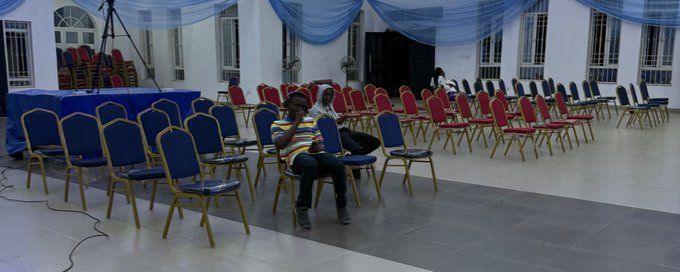
In 2006, while I was still an undergraduate at Bowen University, Amaka Igwe, the veteran filmmaker, invited undergraduates from several Nigerian Universities to her inaugural Best of the Best TV Conference in Abuja.
At the conference, one of the speakers said on live tv that all the movie marketers and music promoters on Ebinpejo lane and other parts of Lagos/Nigeria, including those pirating movies and music, will soon be phased out of the music and movie scene by technology.
He said all our VCDs, CDS, DVDs, Flash drives, and hard drives full of movies and music will become useless in a matter of years, and all the money bags controlling things, including DSTV, will lose out to modernisation.
(I have tried researching the name of the speaker and the topic of his presentation to no avail.
He was invited from the UK to speak at the conference.
The next day, just after the morning presentation of documentation and drama from the universities, all the big men of the music and movie industry at the time arrived at the location of the event
They were angry that some nobody from the United Kingdom had the nerve to say such disparaging things about the industry they had built and sustained without the support of the government for many years.
They interrupted our sessions and insisted they must be given the floor to address the issue.
The organizers told them the speaker meant no harm and was just explaining the reality on the ground on the issue facing the music and movie industry globally at the time, but they refused to listen.
One of them said he was tuning his TV around the previous day when he stumbled on the programme, and they couldn't let such a remark pass in the interest of protecting their good name and businesses
They were given the floor, and they took us on the history of film and music video production in Nigeria.
They talked about how it was difficult for them to raise funds without collateral and how they sometimes would pool funds to do a project while hoping the project would not flop so that they could recoup the money and put it in another project.
They talked about the issue of piracy and how they had been unable to combat it, especially because many Nigerians abroad have the machine to dub CDs and produce the CD cover of the movies for sale in foreign currency
They said they bore the losses without complaining and had invested too much for some foreigner to predict that they would become irrelevant in a few years.
Well, a few years later, the prophecy of the man from the United Kingdom had come to pass.
All the marketers, promoters, financers, investors, backers, distributors, pirates, and so on had been put out of business by Netflix, Showmax, YouTube, Prime Video, Facebook Reels, Instagram Reels, Content Creators of every kind, and so on.
Instead of talking about copies of videos and music CDs and videos sold, we now talk about streaming numbers and charts.
It is always wise to understand the times and pay attention to changing trends and technological advancements in one's industry, rather than argue blindly in favour of the immediate and sentimental issues.
I learnt this lesson at that time, and I took it to heart.
The point I want to make is this: the world is changing, and it will be wise for each of us to prepare for the change and not be caught unawares.
Self-driving cars are now a reality, aeroplanes that can take off, fly, and land by themselves are now a reality, fruit picking robots and burger-making robots are now available.
So many jobs will be taken over by machines
A few years ago, there was a frenzy about coding. Now, coding language is gradually evolving, and coding itself is getting eliminated as a career option.
Elon Musk said most surgeries will be performed by robots in about three years.
As you consider a life and future for yourself and your children, think about ownership.
Big corporations will automate for profit.
You must think of owning skills and businesses that will deliver value outside of established systems, which will be taken over by machines for profitability and effectiveness.
Ownership and creativity are the keys to being relevant in a few years.
Daniel Oyekanmi wrote:
Had a similar conversation with someone last year who was keen on getting into the coding space, and I made it clear that very soon the most basic AI tools would handle complex coding, just the way the ‘scientific’ calculator made certain memory and maths skills redundant.
The real difference is that those who understand these tools are here to stay and that these are designed to free up time and brain space for other things - this, of course, has both the dark and light side, but that’s a conversation for another day.
Understanding and positioning are key.
Just last week, I flashed back to how creating slides was the pride of management consultants. Your PowerPoint skills were compared to the outputs of the likes of McKinsey etc.
My first few months with a Management Consulting firm were a bit of a drag when it came to these aspects cos of how pedantic the SMT would be about how ‘the lines aren’t aligned… the color code isn’t consistent’ etc
Today, I create 20+ slides in less than an hour using Gemini - this includes the time to think through the workflow, decide the story to tell, and correct the output until I get the desired result. These slides are well designed and meet the strictest standards. To imagine some folks back then prided themselves in their ppt skills, and today those skills are redundant.
Even Excel isn’t out of the woods. Yesterday, I created a simple dashboard with drop-downs and embedded validation rules strictly using prompts. Very soon, basic skills, including website designs, would be completed within minutes and with a few key strokes or prompts.
More recently, Claude broke the internet as it can now theoretically decode a language IBM has been gatekeeping for decades. This is the code that financial systems and ATM run on. The implications are huge, and others are catching up.
The landscape has changed and keeps rapidly evolving. Self-driving and flying cars, chef robots, automated surgical machines, even entertainment robots. All of this would be commonplace in a few years as the world that we know ceases to be.
Skills that will be relevant in the future?
At the top of my head are three (3) things
- critical thinking
- creative problem solving
- AI collaboration or even development (ML, LLMs etc)
While most skills are simply tools, these 3 are pathways where all possible tools are integrated/applied to solve real-world and community problem
The paradigm shift is moving from a consumerist mindset to creativity and production. Most people only train to become part of someone else’s production chain, and that’s the first line to fall as machines reach optimization.
Management roles would still be relatively safe for a season, but would significantly shrink as these positions would be occupied by those who can coordinate all the possible machines in a system to create output.
A few niche areas would stand out for those who have a machine phobia and prefer a human touch with the catch of premium pricing, but this would gradually phase out as well
All of these would create their own unique challenges that need solving, both from a technological POV and a humanitarian POV.
The landscape has changed and keeps rapidly evolving. Self-driving and flying cars, chef robots, automated surgical machines, and even entertainment robots. All of this would be commonplace in a few years as the world that we know ceases to be.
-GSW-












Comments (0)
Facebook Comments (0)